
Creatine has been a popular topic on social media and in the fitness world. It’s one of those supplements that gets a lot of buzz for its numerous positive effects, as if it were a miracle supplement. However, as with any supplement, it’s essential to be informed before you go all-in and add it to your diet.
Here are some facts to know about creatine, including how it works, how you can get it naturally, nutrition and creatine, and the important truths about creatine supplementation.
How Creatine Works
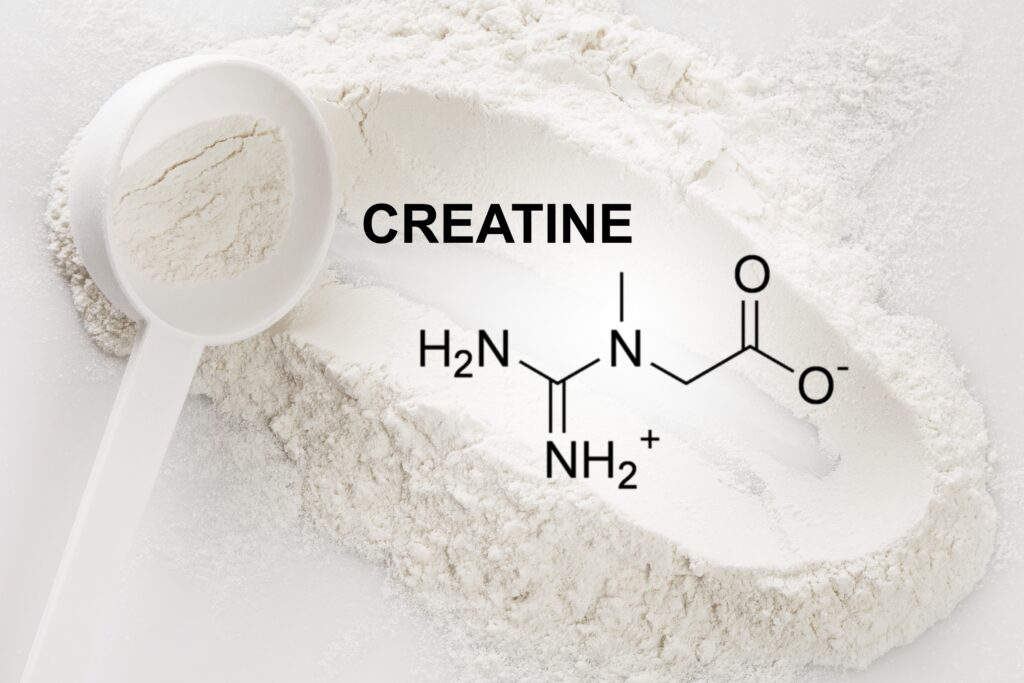
Creatine is found both naturally in many of the foods we eat and as a supplement. But how does creatine work?
Essentially, creatine works with your body’s electrical system to generate and supply energy.
As our bodies use energy during bursts of high energy turnover (like when doing movement), they use adenosine triphosphate (ATP) first. Then, they use N-phosphoryl group from phosphorylcreatine (PCr), which replenishes the ATP.¹
In short, creatine and ATP work together. After our bodies use their primary energy (ATP), creatine is broken down to help replenish those initial energy stores.
The Potential Benefits of Creatine Supplementation
If our bodies use creatine to help replenish energy stores, it would make sense to think that it’s a no-brainer supplement to stay energized. However, it’s important to know the limitations of what it can and can’t do.
Initial research has shown that creatine benefits may include helping with cognitive and general health functions, especially in aging individuals or those who are facing “metabolic stress,” such as sleep deprivation. This may happen as supplementation increases our brains’ stores of creatine, helping that backup energy source stay stocked. It’s also been linked with possibly helping with traumatic brain injuries, muscular dystrophy, along with depression and anxiety.²
Some studies have also shown promise of creatine boosting short-term memory.³
Creatine has generally been recognized as safe through research. However, health agencies, including the European Food Safety Authority (EFSA), have noted that more research is needed to definitively recognize its true benefits—and the limits.⁴
The Federal Drug Administration (FDA) does not evaluate the safety of supplements before they are put on the market, so it can be a dice roll when selecting supplements and knowing their true benefits in the United States.
When it comes to the dosage of creatine supplementation, as noted in a meta-analysis, “most studies have used doses ranging from 2.2 to 20 g/day, with higher doses (20 g/day for 5–7 days) showing acute effects on working memory, but these effects are not consistently replicated at lower or prolonged dosing.”⁵
The Truth About Creatine Supplementation
While creatine is shown to have a positive impact on the brain with cognitive function, the claims—including that it will uncompromisingly boost brain power or athletic performance—should be taken with a grain of salt.
Marketing, influencers, social media, and diet culture are all experts at exaggerating the benefits, making you think creatine (or any other supplement) is the end-all, be-all.
The truth is that research isn’t conclusive, and it might be more of a trend than a necessary supplement for everyone. While there are very few risks, and it’s not likely to be harmful, it might not actually be worth spending your money on.
Additionally, it’s not the only nutritional component that has positive effects on cognitive function. Omega-3 fatty acids and Vitamin D have also been shown to have a positive impact on the brain.⁶ ⁷
Carbohydrates also play a critical role in brain health, including cognitive, emotional, and psychological functions.⁸
The role of proper hydration and brain health should also not be underestimated. Hydration supports a number of body and brain functions, including attention, learning, and memory.⁹
While this supplement can help boost some aspects of your health, creatine for overall health is not a magic potion, and it’s important to ensure you support your health holistically!
If you’re wondering, “Is creatine necessary?” or “Should you take creatine?”
Creatine is necessary for our overall health. However, a majority of individuals don’t have to use creatine supplementation to meet their needs, and the portion that our bodies don’t produce can come from the foods we naturally eat.
How To Get Creatine Naturally
Our bodies naturally produce some creatine; however, about half of our creatine comes from foods we eat.¹⁰
One of the primary natural sources of creatine is meat, with the highest amounts in red meat (including beef), pork, veal, and fish and shellfish. It can also be found in animal milk, including cow, goat, and sheep’s milk.
Because most natural creatine is found in meat and fish, vegetarians and vegans may be at an increased risk of deficiency and benefit from supplementation. They may also have the most noticeable cognitive benefits from supplementation. Again, more research is needed to understand the true limits of creatine supplementation’s benefits.¹¹
Along with vegetarians and vegans, older individuals and people under stress are also more likely to notice benefits from creatine supplementation.
Creatine and Hydration: The Importance of Water Intake
There has been talk over the possible risks of creatine supplementation on kidney function, as people questioned if it led to water retention or caused kidney damage or renal dysfunction.
However, there is no evidence in the medical literature that creatine supplementation at a standard dose of 3–5 grams per day requires more than the general hydration recommendations for adults (9 cups per day for women, and 13 cups per day for men, but individual needs will vary based on activity level and other lifestyle factors, like how much water intake you get from your diet).¹² ¹³
Evidence from multiple clinical studies and position statements, including the American College of Sports Medicine, concluded that creatine does not cause dehydration or impair fluid balance at recommended dosages in healthy individuals.¹⁴
Individuals taking 3–5 grams of creatine per day should follow standard hydration guidelines for healthy adults, adjusted for body size, activity level, and environmental conditions. If you have questions about your individual hydration needs, a dietitian can help determine the right amount for your body.
Adequate water intake is one of the best ways to ensure creatine safety if you add the supplement to your diet.
What To Know About Safe Creatine Supplementation
Creatine monohydrate is the “gold standard” form of creatine for supplementation. It is “the most extensively studied and commonly used form,” making it one of the most reliable options for safe supplementation.¹⁵
The typical standard dosage of a creatine supplement is 3-5 grams per day. “Loading phases” where individuals take a larger dosage for a few days are common among those using creatine for muscle building and saturation, but a daily maintenance dose of 3-5 grams can accomplish similar results in a slightly longer time frame.
While the FDA does not independently test supplements, it’s important to do your own research and look for third-party tested supplements. Trustworthy brands will conduct their own testing to ensure your safety.
Potential Creatine Side Effects
Creatine can cause potential side effects, including electrolyte imbalance, muscle cramping or strains, stomach upset, and water retention and weight gain.¹⁶
Early research sparked concern over kidney damage or renal dysfunction with creatine supplementation, especially in individuals with impaired kidney or renal function.¹⁷ This is thought to stem from elevated serum creatine levels.
One recent meta-analysis suggested that while there was a “modest, transient increase in serum creatinine levels,” it’s thought to be related to “metabolic turnover” and not renal impairment, suggesting preserved kidney function.¹⁸
However, it’s generally recommended for people to use caution with supplements, especially in individuals who are excluded from research, including individuals with an increased risk of renal dysfunction, like patients with diabetes, high blood pressure, and reduced glomerular filtration rate (GFR).¹⁹
It’s also not recommended for children and adolescents or pregnant and breastfeeding women.²⁰ ²¹
Using Creatine Supplements Safely
If you’re interested in using creatine supplements, as long as you are a healthy adult, it’s likely not going to negatively impact your health. However, as with any significant change to your nutrition, it’s best to do so with insight and support from your healthcare team, who can provide expert guidance.
At Life Cycle Nutrition, our expert registered dietitians can help you navigate your health journey and ensure you add any supplements in a way that’s safe for you while meeting your diverse nutritional needs.
Schedule an appointment to support your health today!
Works Cited
- Roschel, Hamilton, Bruno Gualano, Sergej M. Ostojic, and Eric S. Rawson. 2021. “Creatine Supplementation and Brain Health.” Nutrients 13, no. 2 (February): 586. https://doi.org/10.3390/nu13020586.
- Candow, Darren C., Scott C. Forbes, Sergej M. Ostojic, Konstantios Prokopidis, Matt S. Stock, Kyle K. Harmon, and Paul Faulkner. 2023. “”Heads Up” for Creatine Supplementation and its Potential Applications for Brain Health and Function.” Sports Medicine 53, no. 1 (June): 49-65. https://doi.org/10.1007/s40279-023-01870-9.
- Prokopidis, Konstantinos, Panagiotis Giannos, Konstantinos K. Triantafyllidis, Konstantinos S. Kechagis, Scott C. Forbes, and Darren G. Candow. 2023. “Effects of creatine supplementation on memory in healthy individuals: a systematic review and meta-analysis of randomized controlled trials.” Nutrition Reviews 81, no. 4 (March): 416-427. https://doi.org/10.1093/nutrit/nuac064.
- EFSA Panel on Nutrition, Novel Foods and Food Allergens, Dominique Turch, Torsten Bohn, Montaña Cámara, Jacqueline Castenmiller, Stefaan d. Henauw, et al. 2024. “Creatine and improvement in cognitive function: Evaluation of a health claim pursuant to article 13(5) of regulation (EC) No 1924/2006.” EFSA Journal 22, no. 11 (November). https://doi.org/10.2903/j.efsa.2024.9100.
- Candow et al., “Creatine Supplementation and Brain Health.”
- Macpherson, Helen, Sarah Brownell, Rachel L. Duckham, Barbara Meyer, Sam Mirzaee, and Robin M. Daly. 2019. “Multifaceted intervention to enhance cognition in older people at risk of cognitive decline: study protocol for the Protein Omega-3 and Vitamin D Exercise Research (PONDER) study.” BMJ Open 9, no. 5 (May). https://doi.org/10.1136/bmjopen-2018-024145.
- Chen, Huizhen, Xing Pang, and Yinhui Huang. 2025. “Higher dietary vitamin D intake influences brain and mental function in elderly Americans: a cross-sectional analysis.” Frontiers in Nutrition 12 (April). https://doi.org/10.3389/fnut.2025.1564568.
- Arshad, Muhammad T., Sammra Maqsood, Rwan Altalhi, Ghalia Shamlan, Isam A. Ahmed, Ali Ikram, and Muhammed A. Abdullahi. 2025. “Role of Dietary Carbohydrates in Cognitive Function: A Review.” Food Science & Nutrition 13, no. 7 (July). https://doi.org/10.1002/fsn3.70516.
- Mustafayeva, Leyla. 2025. “The Effect of Hydration and Dehydration on Cognitive Performance and Mental Health.” In Feeding the Mind: The Connection Between Diet, Drugs, and Mental Health, edited by Wael Mohamed and Aynur Özge, 317-336. Vol. 1. N.p.: Springer Singapore. https://doi.org/10.1007/978-981-95-1414-4_15.
- “Creatine: What It Does, Benefits, Supplements & Safety.” 2023. Cleveland Clinic. https://my.clevelandclinic.org/health/treatments/17674-creatine.
- Ostojic, Sergej M., and Scott C. Forbes. 2022. “Perspective: Creatine, a Conditionally Essential Nutrient: Building the Case.” Advances in Nutrition 13, no. 1 (January): 34-37. https://doi.org/10.1093/advances/nmab111.
- Antonio, Jose, Darren G. Candow, Scott C. Forbes, Bruno Gualano, Andrew R. Jagim, Richard B. Kreider, Eric S. Rawson, et al. 2021. “Common questions and misconceptions about creatine supplementation: what does the scientific evidence really show?” Journal of the International Society of Sports Nutrition 18, no. 13 (February). https://doi.org/10.1186/s12970-021-00412-w.
- Gordon, RDN, LD, Barbara. 2022. “How Much Water Do You Need?” Academy of Nutrition and Dietetics. https://www.eatright.org/health/essential-nutrients/water/how-much-water-do-you-need.
- Terjung, R L, P. Clarkson, E R Eichner, P L Greenhaff, P J Hespel, R G Israel, W J Kraemer, et al. 2000. “American College of Sports Medicine roundtable. The physiological and health effects of oral creatine supplementation.” Medicine & Science in Sports & Exercise 32, no. 3 (March): 706-717. https://doi.org/10.1097/00005768-200003000-00024.
- Antonio et al., “Creatine Supplementation Misconceptions.”
- Jividen, Sarah. 2025. “7 Potential Side Effects of Creatine.” Verywell Health. https://www.verywellhealth.com/creatine-side-effects-11767455.
- Antonio et al., “Creatine Supplementation Misconceptions.”
- Naeini, Elham K., Milad Eskandari, Mojgan Mortazavi, Alieh Gholaminejad, and Negar Karevan. 2025. “Effect of creatine supplementation on kidney function: a systematic review and meta-analysis.” BMC Nephrology 26 (November). https://doi.org/10.1053/j.jrn.2019.05.004.
- International Society of Nephrology. 2024. “KDIGO 2024 Clinical Practice Guideline for the Evaluation and Management of Chronic Kidney Disease.” Official Journal of the International Society of Nephrology 105, no. 45 (April). https://doi.org/10.1016/j.kint.2023.10.018.
- Metzl, Jordan D., Eric Small, Steven R. Levine, and Jeffrey C. Gershel. 2001. “Creatine Use Among Young Athletes.” Pediatrics 108, no. 2 (August). https://doi.org/10.1542/peds.108.2.421.



0 Comments