
If the idea of listening to your body’s cues and cravings and eating in line with those sounds scary and foreign to you, you’re not alone. To some, the concept of “intuitive eating” sounds like another diet or fad—and to others, it may sound like constant bingeing. However, it’s neither of those.
Intuitive eating and eating disorder recovery often go hand-in-hand, but this practice is not only for those who are navigating that journey. It’s an incredible practice rooted in food freedom that can benefit almost anyone!
Here are some of the common questions and answers about intuitive eating to help guide your journey.
What Is Intuitive Eating?
Intuitive eating is an evidence-based, non-diet approach that helps rebuild trust with your body and food.¹ It’s rooted in the core idea of listening to your body and nourishing it around that, listening to cues like hunger, fullness, satisfaction, and cravings, rather than following rigid “rules.”
It is the most natural way we can fuel our bodies and support our health.
The intuitive eating framework, including its 10 guiding principles, was created by dietitians Evelyn Tribole, MS, RDN, and Elyse Resch, MS, RDN, CEDS-S, Fiaedp, FADA, FAND.² It’s a mindful way of eating that many people practice and find food freedom through!
The 10 Principles of Intuitive Eating Include:
- Reject Diet Culture
- Honor Your Hunger
- Make Peace with Food
- Discover the Satisfaction Factor
- Feel Your Fullness
- Challenge the Food Police
- Cope with Your Emotions with Kindness
- Respect Your Body
- Movement—Feel the Difference
- Honor Your Health—Gentle Nutrition
Learn more about intuitive eating principles.
What Is Intuitive Eating Not?
Many common myths and misconceptions have led people to think it’s rooted in either restriction or complete disregard for fullness cues and eating beyond what’s comfortable. However, neither of those is true.
Intuitive eating is not a diet, and it is not a plan for intentional weight loss.
People often wonder: Can you lose weight with intuitive eating?
Weight is actually not even a focus: Intuitive Eating is weight-neutral, meaning the purpose shifts from weight control to overall well-being.
Every individual’s body will respond differently to intuitive eating; some people may gain weight, some people may lose it, and other people’s bodies may stay at the same weight. This is all related to how your body finds its natural set point.³ Part of intuitive eating is making peace with your body, regardless of what happens when you step on a scale and what the number says.
Remember: The goal of intuitive eating is not to chase the scale. It’s to heal your relationship with food and trust your body.
While it may be hard to move away from that diet mentality and uncouple the emphasis on body weight, especially in our diet-culture-centric society, remember that intuitive eating is not:
- A hidden “healthier diet”
- Eating with zero food structure
- About moralizing food, and labeling it as “good” or “bad”
- One-size-fits-all
Even if we all ate the same amount of food and moved our bodies the same amount, our bodies would still be different shapes and sizes! Your intuitive eating journey will look different from anyone else’s, so it’s important not to compare it (or your body) along the way.
What Are Common Misconceptions About Intuitive Eating?
Unfortunately, there are many misconceptions about intuitive eating that have made people fearful of trying this mindful approach. Understanding some of those misconceptions and clarifications can help you feel more comfortable, trusting of yourself, and confident in moving toward this approach.
Myth #1: Intuitive Eating Is Eating Whatever I Want, When I Want

While intuitive eating begins with giving yourself unconditional permission to eat, it also involves learning to recognize how different foods make you feel.
It’s about flexibility, not chaos. Over time, your body will guide you toward balance and satisfaction.
Especially if you’ve had an extended period of restriction, either cutting out specific foods or entire food groups, it may be more challenging to navigate what your body cues are telling you. Remember, this is about learning about yourself and listening to your body.
Children are the most natural, intuitive eaters. It may feel silly to consider your eating habits in comparison to a child, but think about it this way: A kid may eat a large amount of candy if given the unrestricted freedom to do so.
However, after doing that once or twice, they’ll probably realize it gave them a stomachache and they didn’t feel great afterwards. The next time, they listen to their body, and eat an amount that satisfies them, and then stop when their body tells them they’ve had enough!
As an adult, navigating intuitive eating may feel the same way. When you first start eating without restriction, you may be navigating a lot of cravings and struggle to discern what true satiety feels like.
While you enjoy a wide range of foods that sound great and taste good, you also learn to support your health through gentle nutrition—eating what keeps you full and satisfied, energizes you, and supports your digestion!
Rebuilding hunger and fullness cues may take time, but the more you practice, the better you will get at it. Over time, “eat what you want” evolves into “eat what feels good physically and emotionally.”
Myth #2: It’s a “Hunger & Fullness Diet”
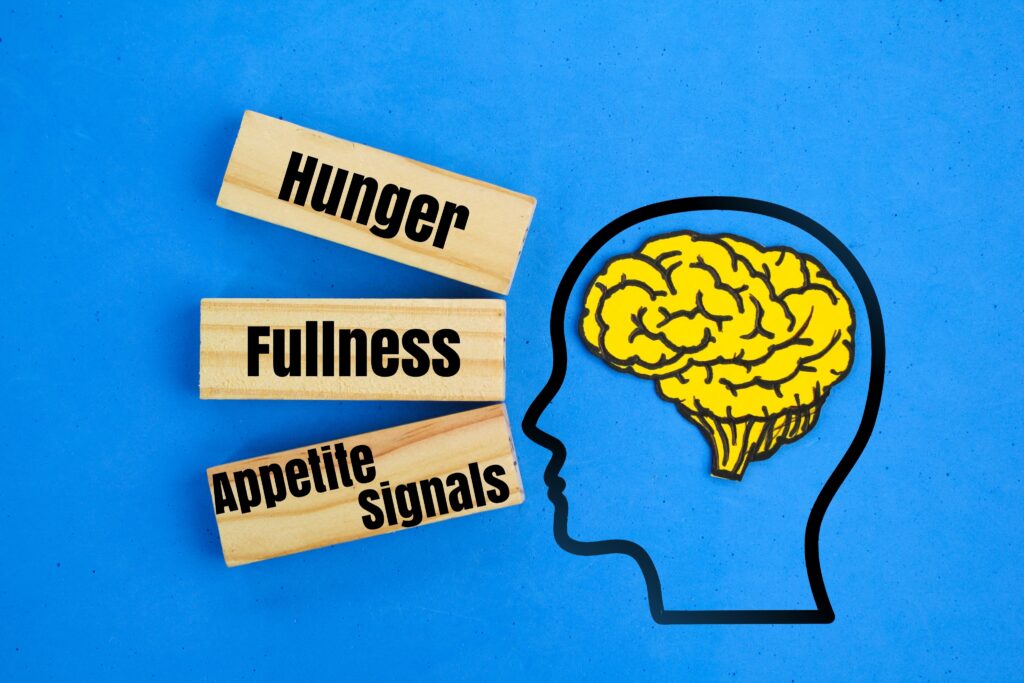
Intuitive eating isn’t just about navigating and listening to your hunger and fullness cues. It also includes satisfaction, emotions, and body respect.
When breaking away from restriction and diet culture, you may feel guilt for eating foods that society tells you are morally “wrong.” However, remember: Food is not moral, and it’s okay if you are having a lot of complex feelings surrounding food, your body, and everything related to the world of intuitive eating.
Your body may change, and it can be difficult to make peace with that at first. Take pauses to remind yourself that this journey will support your long-term wellbeing and help you feel your best, both inside and out.
Myth #3: It Means Ignoring Nutrition
Another common misconception of intuitive eating is that it only includes eating “fun” foods that sound good, and ignoring other vitamin- and mineral-dense foods. It’s the opposite: One of the key principles of intuitive eating is gentle nutrition.
Your body would likely not feel great if you ignored key nutrients that it needs—whether that’s micro or macronutrients. Health and enjoyment go hand-in-hand.
Just as you may crave something rich and hearty in certain moments, there’s a reason your body craves vegetables, fruits, and other fresh foods in others! However, rather than replacing items in your diet, intuitive eating encourages you to mindfully add foods that support well-balanced nutrition. This includes macronutrients, micronutrients, fun foods, fresh foods, and everything in between!
Myth #4: It’s Only for People Without Health Issues
Intuitive eating can be practiced at any stage of health. However, it may require some individual adjustments to ensure you can give your body everything it needs!
Regardless of whether you are navigating a diabetes diagnosis, live with a chronic illness, or have other health concerns, intuitive eating is a great mindful practice that can be for everyone. You may just need some help from an expert intuitive eating dietitian who can ensure you’re getting all the nutrients you need along the way.
Myth #5: You Have To “Get It Perfect”
There’s no perfect way to eat intuitively. It’s a lifelong, flexible practice. Whether it’s on a holiday, a vacation, during a period of stress, or on a random weekday, life can throw us curveballs where we may feel less than perfect in this practice.
That’s what makes it a journey! Every meal, every snack, and every action is an opportunity to put mindful eating into practice. It’s all a learning experience to feel in touch with your body and what it needs!
Does Intuitive Eating Support Health Goals?
In addition to helping you heal your relationship with food and your body, intuitive eating can help support your individual health goals. Intuitive eating can improve blood sugar regulation, digestion, and mental health by reducing stress and restrictive patterns.
You can still honor health goals while maintaining food flexibility and self-trust. In fact, research has shown links between intuitive eating practices and lower disordered eating behaviors, as well as better body image.⁴
Gentle nutrition is a key part of intuitive eating, but it’s not done in a way that is obsessive. Rather, it’s supportive of your overall health and wellness. A registered dietitian is a great resource to help you navigate this and can help tailor the principles to your unique needs.
How Do I Know I’m Making Progress?
Especially if you’re new to the world of intuitive eating as you break away from diet culture, it may feel like a constant uphill climb. It’s totally normal to feel big emotions, like guilt, anger, frustration, and shame, amid the joy of finding food freedom! Healing your relationship with food can take time.
A few signs that you’re making progress, supporting your body, and stepping into confidence with intuitive eating include:
- Feeling less food guilt and more body trust
- Eating without rigid rules or restrictions
- Enjoying food with more flexibility
- Feeling more satisfied and nourished after meals
- Viewing food as neutral, rather than as morally or “good” or “bad”
- Experiencing more confidence in your body’s signals and trusting your hunger, fullness, and satiety cues
- No longer thinking about food all day long
All progress is progress, and it’s important to recognize how far you’ve come on your journey.
When Can Intuitive Eating Be Helpful?
For many people, the concept of intuitive eating may be scary or even seem silly. If you’re wondering if it’s something you should try, here are a few signs that it could help you:
- You’re ready to step away from chronic dieting.
- You want to stop feeling guilt or shame surrounding food.
- You want to rebuild trust in your body.
- You want to eat with more ease and satisfaction.
- You’re seeking a sustainable, compassionate approach to nutrition and self-care.
How Do I Know I Need Support Before Starting My Intuitive Eating Journey?
While intuitive eating is an incredible and transformative practice, there may be moments when you need a little more structure.
If you’re recovering from an active eating disorder, you may need a structured, therapeutic plan first to ensure nutritional rehabilitation and restoration of health. Intuitive eating is often a recovery-focused goal, but it may need to wait until you’re a little more progressed, and that’s okay! Working with a dietitian for recovery and then transitioning into intuitive eating is completely normal—it just takes time!
Navigating a new or unstable medical condition that requires specific nutrition guidelines means it’s a good idea to work closely with your healthcare team to ensure that’s addressed first.
Because listening to your body’s cues is one core aspect of mindful eating, if your hunger and fullness cues are completely absent, guidance from a registered dietitian can help bridge the gap.
These factors don’t mean you can never do intuitive eating—it just means you should focus on those aspects of your health first! However, everyone can still embrace aspects of mindful eating, like noticing how your body feels before and after a meal and checking in with yourself.
What Are Some Tips for Getting Started?
Especially if you’ve restricted in the past, intuitive eating may be the complete opposite of what you’re used to. Intuitive eating vs. dieting are opposites, so, naturally, you may not know where to begin!
A great way to begin is to practice listening to your body, even when it’s not related to eating. Check in with yourself. How are you feeling physically and emotionally? What sensations do you notice? How do you feel before, during, and after meals? How do certain foods make you feel?
Next, take it one step at a time, and one principle at a time! Don’t expect your relationship with food and your body to heal overnight. For many people, it can be a long journey to navigate eating with this new mindset and healing. However, focusing on working through all of the principles can help you build your success and confidence.
Lastly, don’t be afraid of seeking support. A registered dietitian who focuses on intuitive eating can help you work through the challenges you may face, and help you become confident in trusting yourself and your body!
Whether you’re navigating intuitive eating and eating disorder recovery or simply wanting to step away from a life rooted in diet culture, you deserve to live a life of food freedom.
If you’re ready to start your journey into intuitive eating, schedule an appointment with our team today!
Works Cited
- Cleveland Clinic. 2025. “Intuitive Eating: Benefits and Principles.” Cleveland Clinic Health Essentials. https://health.clevelandclinic.org/what-is-intuitive-eating.
- Intuitive Eating. n.d. “10 Principles of Intuitive Eating.” Intuitive Eating. Accessed November 1, 2025. https://www.intuitiveeating.org/about-us/10-principles-of-intuitive-eating/.
- Byrne, Christine. 2021. “How The ‘Set Point Weight’ Theory Can Help You Make Peace With Your Body.” Huff Post, November 1, 2021. https://www.huffpost.com/entry/set-point-weight-theory-body_l_617c071ce4b079111a646ad9.
- Denny, Kara N., Katie Loth, Marla E. Eisenberg, and Dianne Neumark-Sztainer. 2012. “Intuitive eating in young adults: Who is doing it, and how is it related to disordered eating behaviors?” Appetite 60, no. 1 (October): 13-19. https://doi.org/ 10.1016/j.appet.2012.09.029.

0 Comments