
We’ve all been there—you realize you ate breakfast later than normal (or maybe didn’t eat it at all), and you find yourself feeling irritable, having a short temper, and being low on energy. Most of us have felt “hanger,” or a sense of anger from being hungry, at some point.
This is just one example of the many ways our relationship with food and the way we nourish our bodies can impact our mood, mental health, and emotional well-being. However, that’s not all.
Our brains depend on food for energy! In addition to fueling our physical selves, food is also fuel for our brains, in fact our brain is the organ that requires the most energy in our bodies, and provides the building blocks for neurotransmitters that carry messages throughout our entire bodies.¹
Small changes in your meals and nutrients can affect both your short-term mood—like that “hangry” feeling—or, they can cause long-term risks for things like depression and anxiety. However, also being mindful and intentional about fueling your body with gentle nutrition can have a positive impact on your mental health and support your well-being from the inside out!
Nutrition & Mental Health: How Overall Energy Availability Affects Mood
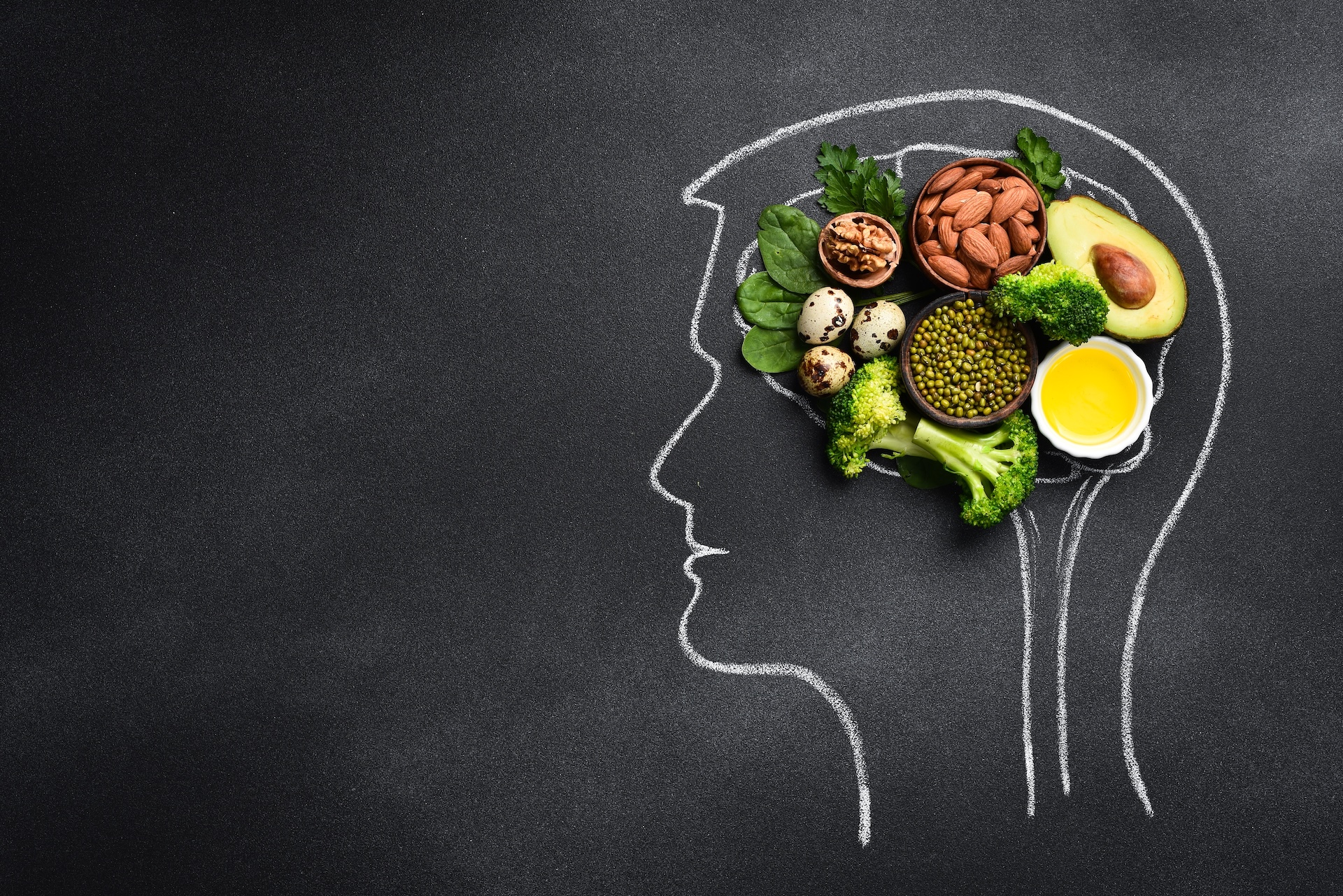
Your body’s energy availability (how much fuel, or food, you give it, and what kind) can impact both short-term and long-term mood.
Short-Term Impacts of Nutrition and Mood
When your body isn’t getting enough fuel, it can cause low blood glucose, or as it’s more commonly called, low blood sugar. This can trigger a stress response in your body, which releases stress hormones like adrenaline as your body fights to stabilize your blood sugar levels.²
This can also increase irritability, poor self-control, and that familiar “hangry” feeling. Frequent big swings in glucose are also tied to mood instability.
All these symptoms can be triggered by something as small as not eating enough food during a particular meal, waiting too long between meals and snacks, or skipping meals entirely. Luckily, ensuring you consistently fuel your body with a wide range of nutrients and eating to satiate and fuel your body can help avoid these uncomfortable symptoms.
Long-Term Impacts of Food and Mental Health
While the short-term impacts of food (or not getting enough of it) are often easily recognizable and remedied by having a meal or snack, the long-term impacts are not as often considered.
Inadequate calorie intake elevates the stress hormone, cortisol, and can worsen anxiety symptoms.³
While in the short-term, people may feel a rush in things like dopamine, over time, restriction and inadequate calorie intake can also suppress neurotransmitter production (like serotonin and dopamine) and dysregulate the hypothalamic-pituitary-adrenal (HPA) axis, leading to persistent low mood.⁴
This highlights how important it is to consistently fuel your body with a wide variety of nutrients.
Nutrition and Emotional Well-Being: The Importance of Fueling Your Body
Many people often hammer the importance of fruits and vegetables for their micronutrient (vitamin and mineral) benefits. While these undoubtedly play an essential role in our health, both inside and out, macronutrients (carbohydrates, proteins, and fats) are the primary sources of energy for our bodies, and all work together to keep our minds and bodies fueled.
However, micronutrients are still an important piece of the puzzle and support your mind health in essential ways. It’s all about balance and variety!
The Role of Macronutrients in Nutrition and Brain Health
Macronutrients are the fuel that powers our physical and mental selves.
Eating consistently and combining carbohydrates with proteins and fat will help your body get the most nutrients out of every meal and snack!⁵
Carbohydrates
Carbohydrates are the brain’s primary fuel, and they impact so many mental health functions, including mood regulation and cognitive performance. Because it’s your body’s primary fuel source, variations in how much you eat can play a huge role in your overall energy and mood.
Furthermore, eating some complex carbohydrates can positively impact short- and long-term memory, as well as healthy brain aging.⁶
Proteins
Proteins impact our bodies’ thinking abilities, stress resilience, and appetite regulation!
Proteins supply our bodies with amino acids, including tryptophan, tyrosine, histidine, and arginine, needed to make neurotransmitters like serotonin, dopamine, and more, contributing to our overall mood and mental well-being.⁷
When eaten in combination with carbohydrates and fats, these help support digestion and keep us feeling full—therefore, feeling fueled and mentally energized.
Fats
Fats help power a wide range of bodily functions that directly relate to mental health, including supporting our cell membranes, neurotransmission, and more.⁸
Furthermore, research has linked long-chain omega-3 fatty acids with helping reduce depressive symptoms, especially when coupled with antidepressants.⁹
Coupled with carbohydrates and proteins, fats help us feel full and get the most nutrients out of every meal or snack to power our bodies and brains!
Micronutrients, Nutrition, and Mental Health
While macronutrients, including carbohydrates, proteins, and fats, are the fuel for our bodies and their functions, micronutrients are critical for mental health.
Vitamin D
In addition to causing physical health problems like bone pain, muscle weakness, and more, vitamin D deficiency has been linked with mental health struggles, including fatigue and mood changes, including depression.¹º
One meta-analysis found that vitamin D supplementation was found to help improve depressive symptoms in the short term.¹¹
B Vitamins
B vitamins help our body metabolize carbs, proteins, and fats, support cell growth and development, and more.¹²
Research shows that deficiencies in B vitamins, including folate and B12, have been linked with an increased risk of and higher occurrence of depression.¹³ Other research showed that deficiency of folate and B12, along with elevated levels of the amino acid homocysteine, have been linked to depression.¹⁴
However, B vitamin supplementation has been associated with a positive impact on mood, showing its importance!
Iron
Iron helps our bodies’ red blood cells move oxygen around, and it also helps make molecules that create essential brain chemicals. Even without true anemia, an iron deficiency can cause fatigue and cognitive and emotional symptoms.
Research has also linked iron deficiency with higher rates of anxiety, depression, psychotic disorders, and sleep disorders.¹⁷
On the other hand, iron supplementation has been shown to help boost mood and reduce fatigue, even in those who were not iron-deficient.¹⁷
Zinc
Zinc supports a wide range of bodily functions, including growth and development, immune function, and more.¹⁸
Research has highlighted a link between zinc deficiency and an elevated risk of depression, while zinc supplementation has been shown to benefit symptoms.¹⁹
These are just a few of the many micronutrients that can positively impact your mental health. They all work together to support your mental well-being!
The Big Picture: How Food Affects Mood
In addition to specific macro- and micronutrients impacting mood, our diets as a whole can impact our mood.
One analysis of several studies noted that one study found a diet rich in items such as fruits, vegetables, whole grains, olive oil, and antioxidants was linked with a decreased risk of depression.²²
Other research has linked the role between the gut-brain axis and mental health. Namely, the different bacteria in the gut microbiome, or an imbalance of them, can influence mental health. Eating fermented foods, fiber-rich options, and those that have omega-3s can help support a healthy microbiome and boost mood.²³
How to Support Your Mental Health Through Diet
So, how do you support your mental health through your diet? It doesn’t start with restriction. If you want to incorporate more nutrients, both macro and micro, it’s best to add to your diet rather than taking things away!
If you notice yourself feeling “hangry,” a quick fix is to have a balanced snack with carbohydrates, protein, and fat. For example, a yogurt, some fruit, and a handful of nuts can give you a boost of energy and help calm your mood.
One particular meal is not going to make or break your diet. However, making it a habit to include a balance of carbohydrates, protein, fats, and fruits and vegetables at meals will help ensure balance and variety, giving you all those essential nutrients your body needs!
It’s also important to listen to what your body needs and practice intuitive eating, including gentle nutrition to ensure you’re nourished. Some days, that may mean adding a nutrient-dense side of veggies, and others it may mean having a fun food like ice cream! Our bodies do an amazing job of telling us exactly what they need.
Ongoing Research on How Food Affects Mood
There is lots of research showing the powerful impacts that a person’s diet can have on mental health. However, many studies on diet and mental health are observational, and more research is needed to understand the true impacts.
Furthermore, just as we are all unique individuals, so are our nutritional needs! Our genetics, individual microbiome, medications we may take, and psychosocial factors can all impact how our bodies respond to dietary changes.
It’s also important to note that while a balanced diet full of macronutrients, micronutrients, fresh foods, and fun foods can play a positive role in mental health, it’s not a replacement for psychotherapy or medication.
How do you know if you need more support? A healthcare provider or dietitian can help you navigate any specific deficiencies or needs, and also support you in working with any preexisting conditions as they relate to your individual needs.
Working with a trusted therapist, counselor, and/or psychiatrist, alongside supporting your individual nutrition needs, can be transformative in your mental health. Remember that you are not alone, and you deserve to be heard!
Supporting Your Mental Health Through Nutrition
If you’re looking to take the next step in supporting your mental health through nutrition, Life Cycle Nutrition is here for you. Our dietitians are certified experts who are here to listen to you and support your individual goals, regardless of where you are in your journey.
Whether you’re curious about adding vitamins for mood support or simply taking a holistic look at how to best support your mind through your diet, we are here for you.
And, if you’re looking for help navigating restrictive eating and depression, our experts work with your team to help navigate eating disorder recovery and mental health concerns.
Schedule an appointment today and let us walk alongside you in your journey!
Works Cited:
- Gasmi, Amin, Aniqa Nasreen, Alain Menzel, Asma G. Benahmed, Lyudmila Pivina, Sàdaf Noor, Massimiliano Peana, Salvatore Chirumbolo, and Geir Bjørklund. 2022. “Neurotransmitters Regulation and Food Intake: The Role of Dietary Sources in Neurotransmission.” Molecules 28, no. 1 (December). https://doi.org/10.3390/molecules28010210.
- Harvard Health Publishing. 2022. “Hypoglycemia.” Harvard Health. https://www.health.harvard.edu/a_to_z/hypoglycemia-a-to-z.
- Tomiyama, A Janet, Traci Mann, Danielle Vinas, Jeffrey M. Hunger, Jill DeJager, and Shelley E. Taylor. 2010. “Low Calorie Dieting Increases Cortisol.” Psychosomatic Medicine 72, no. 4 (April): 357-364. https://doi.org/10.1097/PSY.0b013e3181d9523c.
- Beeler, Jeff A., and Nesha S. Burghardt. 2022. “The Rise and Fall of Dopamine: A Two-Stage Model of the Development and Entrenchment of Anorexia Nervosa.” Frontiers in Psychiatry 12 (January). https://doi.org/10.3389/fpsyt.2021.799548.
- Marriott, Bernadette M., ed. 1994. Food Components to Enhance Performance: An Evaluation of Potential Performance-enhancing Food Components for Operational Rations. Washington, DC: National Academy Press. https://www.ncbi.nlm.nih.gov/books/NBK209056/.
- Arshad, Muhammad T., Sammra Maqsood, Rawan Altalhi, Ghalia Shamlan, Isam A. Ahmed, Ali Ikram, and Muhammed A. Abdullahi. 2025. “Role of Dietary Carbohydrates in Cognitive Function: A Review.” Food Science & Nutrition 13, no. 7 (July). https://doi.org/10.1002/fsn3.70516.
- Institute of Medicine, Committee on Military Nutrition Research, and Harris R. Lieberman. 1999. The Role of Protein and Amino Acids in Sustaining and Enhancing Performance. Washington, DC: National Academies Press. https://www.ncbi.nlm.nih.gov/books/NBK224629/.
- Harvard Health Publishing. 2021. “Know the facts about fats.” Harvard Health. https://www.health.harvard.edu/staying-healthy/know-the-facts-about-fats.
- Mehdi, Seema, Kishor Manohar, Atiqulla Shariff, Nabeel Kinattingal, Shahid U. Wani, Sultan Alshehri, Mohammad T. Imam, Faiyaz Shakeel, and Kamsagara L. Krishna. 2023. “Omega-3 Fatty Acids Supplementation in the Treatment of Depression: An Observational Study.” Journal of Personalized Medicine 13, no. 2 (January). https://doi.org/10.3390/jpm13020224.
- Cleveland Clinic. 2022. “Vitamin D Deficiency: Causes, Symptoms & Treatment.” Cleveland Clinic. https://my.clevelandclinic.org/health/diseases/15050-vitamin-d-vitamin-d-deficiency.
- Ghaemi, Shadi, Sheida Zeraattalab-Motlagh, Ahmad Jayedi, and Sakineh Shab-Bidar. 2024. “The effect of vitamin D supplementation on depression: a systematic review and dose–response meta-analysis of randomized controlled trials.” Psychological Medicine 54, no. 14 (November): 3999-4008. https://doi.org/10.1017/S0033291724001697.
- Richter, Amy. n.d. “Vitamin B: Benefits, Side Effects, and more.” Medical News Today. Accessed September 28, 2025. https://www.medicalnewstoday.com/articles/325292.
- Young, Lauren M., Andrew Pipingas, David J. White, Sarah Gauci, and Andrew Scholey. 2019. “A Systematic Review and Meta-Analysis of B Vitamin Supplementation on Depressive Symptoms, Anxiety, and Stress: Effects on Healthy and ‘At-Risk’ Individuals.” Nutrients 11, no. 9 (September). https://doi.org/10.3390/nu11092232.
- Tiemeier, Henning, H Ruud van Tuijl, Albert Hofman, John Meijer, Amanda J. Kiliaan, and Monique M. Breteler. 2002. “Vitamin B12, folate, and homocysteine in depression: the Rotterdam Study.” American Journal of Psychiatry 159, no. 12 (December): 2099-2101. https://doi.org/10.1176/appi.ajp.159.12.2099.
- Gavin, Kara. 2023. “Could low iron make mental health symptoms worse?” Michigan Medicine. https://www.michiganmedicine.org/health-lab/could-low-iron-make-mental-health-symptoms-worse.
- Richter, Amy. 2018. “Zinc: Benefits, Deficiency, Food Sources and Side Effects.” Healthline. https://www.healthline.com/nutrition/zinc.
- Wang, Jessica, Phoebe Um, Barbara A. Dickerman, and Jianghong Liu. 2018. “Zinc, Magnesium, Selenium and Depression: A Review of the Evidence, Potential Mechanisms and Implications.” Nutrients 10, no. 5 (May). https://doi.org/10.3390/nu10050584.
- Wang, Jessica, Phoebe Um, Barbara A. Dickerman, and Jianghong Liu. “Zinc, Magnesium, Selenium and Depression.”
- Li, Ye, Mei-Rong Lv, Yan-Jin Wei, Ling Sun, Ji-Xiang Zhang, Huai-Guo Zhang, and Bin Li. 2017. “Dietary patterns and depression risk: A meta-analysis.” Psychiatry Research 253 (July): 373-382. https://doi.org/10.1016/j.psychres.2017.04.020.
- Solan, Matthew, and Howard E. LeWine. 2024. “How — and why — to fit more fiber and fermented food into your meals.” Harvard Health. https://www.health.harvard.edu/blog/how-and-why-to-fit-more-fiber-and-fermented-food-into-your-meals-202404263036.


0 Comments