
Especially in a society so overwhelmed with diet culture, from a young age, many of us are taught to feel critical of our bodies, told that we should change our appearance, and shown that negative self-talk is “normal.”
Despite what diet culture may tell us, we don’t have to live like this. As a human, living in a body that you’ve been taught to hate can be a miserable experience.
But what if, instead of changing your body, you could change the way you think and feel towards your physical self?
What would life look like if you practiced body kindness, had a more neutral or even positive relationship with yourself, and shifted your focus away from your physical experience to appreciate everything your body does for you?
Body image healing, whether in eating disorder recovery, or as you want to move toward having a more positive relationship with your physical self, is transformative. Keep reading to learn simple body image exercises for recovery.
What Is Body Image?
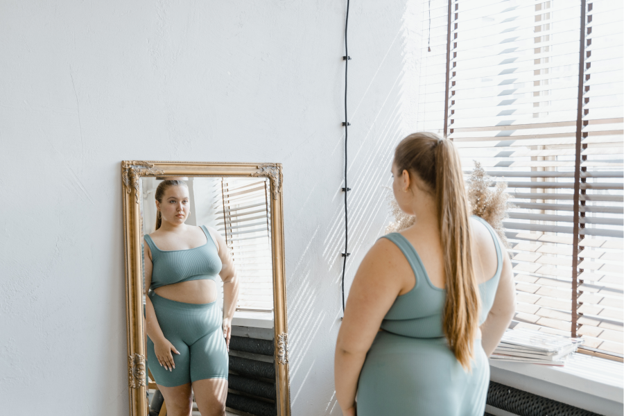
Whether you’re looking for body image strategies for eating disorder recovery or want to know how to reframe negative thoughts about your body, working on body image can feel scary, unnatural, and everything in between.
You may be wondering: What is body image, exactly?
As noted by the National Eating Disorders Collaboration, body image “is a combination of the thoughts and feelings that you have about your body.”¹ Body image can be positive, negative, and neutral (everything in-between). And those feelings may fluctuate over time, from day to day, or season to season.
How To Improve Body Image
While it’s completely normal to have a range of body image thoughts, feelings, and perceptions, body image concerns and negative body image can pose a real mental health risk.
One comprehensive review found “body image concerns constitute a burden at the global level,” and noted already vulnerable groups face an even higher risk.²
Improving body image can be transformative in healing your relationship with your physical self.
If you’re wondering how to stop negative self talk about your body, removing triggers, learning mindful practices rooted in body kindness, and challenging unhelpful (and often untrue) thoughts and behaviors can all transform your body image for the better.
Remove Triggers
Take a moment to consider instances when you maybe were feeling neutral or even positive in your own body, only to have one seemingly small thing completely shift your perception of yourself.
Some common examples may be:
- Seeing your weight on a scale
- Reading a diet-culture-centered post on social media
- Hearing or reading negative comments from other people about their bodies
- Body-checking, or closely evaluating your body’s appearance (can be in the mirror, through weighing yourself, touching specific body parts as you analyze their appearance, or comparing your body with past versions of yourself or with others’ bodies)
Identify these triggers, and next time you notice it, intentionally stop.
While many of us have grown up with scales in our homes, the truth is: It’s typically not medically necessary to weigh yourself frequently. And many of us are familiar with how frequently comparing numbers can alter our mood on the day-to-day. If the scale is a trigger for you, remove it out of your home! You likely don’t need it.
Body checking behaviors are a common disordered eating behavior, and can easily create unhelpful thought patterns. If you recognize yourself body-checking in other ways, take a moment to pause. Take a deep breath, remind yourself that your body is okay just the way it is, and do something else.
Next time you see an unhelpful comment or post on social media, consider if it’s content you want in your feed. Hit “unfollow” and look for options like “Don’t show me posts like this.” Many platforms also allow you to type specific words that you don’t want to see in your feed, and you can make a list to make your feed a better place.
Knowing how to remove body image triggers is incredibly helpful and can make improving your relationship with yourself much easier.
Accept What’s Helpful—and Leave What Isn’t
As much as we may want to filter all of the content we read and the messages we hear, the truth is: we can’t control everything.
You may have to work with people who have less-than-helpful perceptions about their own body that they like to share freely. One helpful way to navigate the body images you can’t filter is to accept what’s helpful and leave what isn’t.
Next time you hear or read something that triggers a strong feeling within yourself, take a minute to pause and explore that feeling. Ask yourself what emotions it sparked, and don’t judge them. If it makes you feel anything less than good about yourself, chances are, it’s not helpful—and likely not a thought you want to believe!
Sometimes, all it takes is recognizing that a message isn’t helpful. Just because it’s someone else’s belief doesn’t mean it has to be yours. Then, give yourself permission to replace that with a thought you want to believe instead!
For example, if someone says:
- I shouldn’t have had that cookie, I’m so bad.
You may realize this makes you feel anxious, guilty, and shameful for eating a cookie yourself. This may spark a wave of negative body image thoughts.
After you recognize this trigger and the thoughts you had afterward, you can decide to leave that comment and affirm what you know to be true instead.
- Food is not morally good or bad, and it does not make me a bad person for enjoying a specific kind of food. That cookie was my favorite flavor, and all food provides me energy. It feels awesome to nourish my body with a variety of foods that bring me joy.
While it may feel unnatural at first, reframing negative thoughts about your body becomes much easier the more you practice it!
Use Body Image Affirmations and Practice Body Neutrality
Body image affirmations, or the practice of saying affirming and accepting statements about our bodies and what they can do for us, has been scientifically shown to help improve perceptions about our bodies!³
Repeating body neutrality statements can help us rewire our brains to lean toward beliefs that we want—rather than what society or diet culture tells us to believe.
You may be wondering: What is body neutrality? What is the difference between body positivity and body neutrality?
Body neutrality is a practice where we accept our bodies for everything they can do for us and the way they are.⁴
While body positivity focuses on moving to love our appearance even when we may feel the opposite, body neutrality often feels much more approachable because the statements feel undeniably true.
Affirmations around body neutrality in eating disorder recovery, and every single day, are an incredible way to help build a better body image and start healing your relationship with your physical self.
Examples of body image affirmations include:
- “My body allows me to express love to those important to me.”
- “I choose to enjoy foods that taste good, bring me joy, and nourish my body.”
- “It is normal for my body appearance to change.”
- “I accept my body as it is.”
Check out more body neutrality affirmations from Project Heal.
Create an Environment That Makes You Feel Good, Inside and Out
Because diet culture spends years making us feel like our bodies aren’t good enough, no matter how much we do, it’s completely normal that it will take time for us to heal that relationship with our physical selves.
While it’s impossible to control everything that happens outside your home, you can make the environment around you a safe space that makes you feel good inside and out.
Look around your home and consider if there’s anything that makes you feel less than. What are some things you can get rid of that don’t make you feel your best? What can you add that will help?
A few examples include:
- Move mirrors to spaces where you are checking your appearance only when needed, instead of spaces where it invites extra body-checking. (By the door before you go, in the bathroom, etc.)
- Put affirmations on your mirror, on the wall next to your bed, or on the fridge, and read them out loud.
- Go through your closet. Get rid of clothes that don’t fit you or make you feel physically uncomfortable. Show yourself love and build a closet of pieces that fit the body you have now. Reminder: Clothes are made to fit you—not the other way around.
- Turn food labels toward the back of the cabinet so you can stay focused on what sounds good, rather than the numbers tied to them. Remind yourself that numbers are only energy, and you deserve to enjoy foods that nourish your body and soul!
Taking inventory of your home and creating a space that feels safe will help you in your journey to healing your body image.
Finding Strategies for Healing Body Image in Eating Disorder Recovery
Your relationship with your body is lifelong—and the journey to healing your body image may take time.
Remind yourself that you weren’t taught to hate your body in a single day, and daily practice is important to begin that journey toward body acceptance. However, taking mindful steps like removing triggers, reframing negative thoughts, and intentionally choosing to adopt more accepting beliefs can help you improve body image.
Whether you’re looking to improve body image in eating disorder recovery or simply want to heal your relationship with your physical self, you deserve to feel good inside and out.
If you’re looking for more support in your journey to heal your body image, Life Cycle Nutrition is here to help. Schedule an appointment, and our dietitian nutritionists will guide you toward body kindness and a better body image. As dedicated eating disorder dietitians in Omaha, we’re ready with body image tips to help you on your journey. Additionally, our exclusive Body Image Makeover is an 8-week group for women ready to break free from body shame and feel comfortable and confident in their own skin. Click here to register or learn more on our website: www.LCNutritionOmaha.com
Body Image FAQ
How can I improve my body image and feel better about my body?
Improving body image and healing your relationship with your body can happen every single day. Practicing body kindness, removing triggers that spark unhelpful thoughts and feelings, and taking a more neutral approach around your body image can help you feel more positive.
What is body neutrality?
Body neutrality takes a non-judgmental approach to our bodies. Rather than focusing on appearance, it focuses on everything our bodies do for us and how they allow us to experience the world.
What are body image affirmations?
Body image affirmations are statements that, especially when used to counter negative thoughts, help reshape our beliefs over time.
How can I stop negative self-talk around my body image?
Recognizing negative or unhelpful self-talk about your body and body image when it happens is the first step. When you notice those thoughts, don’t be hard on yourself. Accept that you have the thought, and then reframe it with one that’s more helpful.
How can I remove body image triggers that make me feel bad about myself?
Some negative body image thoughts happen from things like social media, seeing our weight on a scale, or hearing thoughts from others that we internalize, which trigger those feelings. Steps like unfollowing accounts, muting specific words or phrases linked to unhelpful content, and removing your scale can all help.
When you recognize that those feelings are triggered, think intentionally about whether you want to accept those thoughts or beliefs from others, and reframe them.
Works Cited
- National Eating Disorders Collaboration. n.d. “Body Image.” National Eating Disorders Collaboration. Accessed August 31, 2026. https://nedc.com.au/eating-disorders/eating-disorders-explained/body-image.
- Rodgers, Rachel F., Katherine Laveway, Priscila Campos, and Pedro H. Berbert de Carvalho. 2023. “Body image as a global mental health concern.” Global Mental Health 10, no. 9 (February). https://doi.org/10.1017/gmh.2023.2.
- Armitage, Christopher J. 2012. “Evidence that self-affirmation reduces body dissatisfaction by basing self-esteem on domains other than body weight and shape.” Journal of Child Psychology and Psychiatry 53, no. 1 (January): 81-88. https://doi.org/10.1111/j.1469-7610.2011.02442.x.
- Fuller, Kristen. 2025. “Body Positivity vs. Body Neutrality.” Verywell Mind. https://www.verywellmind.com/body-positivity-vs-body-neutrality-5184565.



0 Comments
Trackbacks/Pingbacks