

Body image standards and “ideals” have looked different in every era of recorded history.
Cultural and social forces have shaped body ideals over time and affected individuals for hundreds and thousands of years.
While many modern body image standards are rooted in thinness, that hasn’t always been the case.
As body image standards have shifted throughout history, from the Renaissance to today, one thing has remained constant: Individuals have felt pressure to fit these “standards”—even though our bodies are diverse!
Beauty standards are not moral or health benchmarks; they are cultural constructs. Understanding the history of body image “ideals” or “standards” and how they have shifted over time can help you identify them, call them out, live a more authentic life, and embrace the diversity that truly represents our world.
A Look at How Body Image Standards Have Changed Throughout History
For tens of thousands of years—we have seen how representations of the human body have shifted. These cultural body standards often appear in art, media, and literature.
Although the body image that has been perceived as “ideal” has shifted in different cultures and across different eras, humans for generations have felt pressure to align with these so-called “standards” and manipulate our bodies to appear a certain way.¹ ²
- European Figures Dated from 23,000 to 25,000: Often depicted full-figured silhouettes with lots of curves.
- King Ling of Chu state in China (540 BC to 529 BC), and other ancient Chinese literature: A preference for a “willow waist” and slender figures was synonymous with beauty.
- Tang Dynasty in China (618 to 907 CE): Fuller figures were favored, as it signified having enough money to afford an abundance of food.
- Renaissance Era (14th to 17th Century): Art often depicting fuller figures was incredibly popular, and curves were beloved.
- Victorian Era England(1837-1901): Corsets were the norm, and having a small waist denoted societal decency, despite them causing severe health complications
- 1920s: Beginning in the 1920s flapper era, thinness became a focus in beauty standards.
- 1950s: As media focus on models like Marilyn Monroe rose, rounder figures were idealized.
- 1960s and 1970s: A focus on youthfulness and thinness was popularized again, largely linked to fashion models like Twiggy.
- 1980s, 1990s, and early 2000s: With the rise of supermodels, an increasing focus on fitness and thinness further drove an emphasis on thinness. Media was well known for outwardly shaming bodies around this time, further contributing to societal pressures.
- 2010s: More body diversity was celebrated, especially with the rise of body positivity and body neutrality.
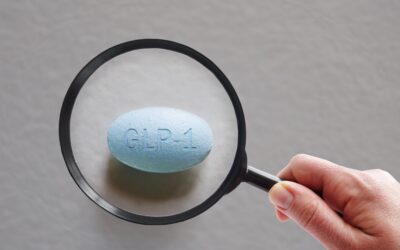
- Today: In North American and European countries, with the popularization of medications like semaglutides for weight loss, there has been an increased focus on thinness, especially in the media and from celebrities, and this is driving standards globally. However, many others push back against those ideals, and outwardly advocate for more diverse representation—and ideals still do vary across cultures.³
Are Beauty Standards Real or Cultural? A Look Across Cultures
Not only have body image standards shifted across history, but they also vary with cultural influences.⁴
| Western countries including the United States, Canada, England, and Australia | Research noted that “there is a notable emphasis on thinness as an ideal, often leading to higher levels of body dissatisfaction among women.” |
| Japan, South Korea, and other Asian countries | There is also an extreme emphasis on thinness, driving feelings of body dissatisfaction and an increase in disordered eating behaviors to fit those ideals. |
| African countries, meanwhile, especially those in more rural areas | Are less focused on thin ideals. |
| Oceanic countries, including Fiji and Tonga | Body image culture favors larger bodies—contrary to many Westernized standards. |
| Latin American countries, including Argentina and Brazil | Body perceptions were found to be more diverse, with less focus on thinness |
| The Caribbean and some other regions | Research showed more diverse body image perceptions. |
In some cultures, body image perceptions were found to be influenced more by the perceived desirability of the opposite gender.
While many body image standards focus on women’s history, standards can also shift between male and female perceptions. Asian and American beauty standards for males, for example, often focus on sharp jawlines and muscularity.
Despite varied body image standards across countries, research found a constant: perceptions were often linked to body dissatisfaction.
How Influences Shape Our Perceptions of “Body Image Standards”
Media—including news and entertainment, social media, art, and other channels—amplify body image ideals as if they are trends.
This isn’t new; it dates back to ancient figures from 30,000 years ago and in paintings and sculptures dating back hundreds of years.
Now, it may come in the form of an advertisement, an Instagram post, or a celebrity on TV.
However, our bodies are not trends. Our bodies are a part of who we are, but they do not define our morality, our personality, or the kind of person we are.
Why Beauty Standards Are Not Facts
Body image and diet culture history are deeply intertwined.
Diet culture and much of society are incentivized to make us feel insecure to drive their own profits. With the weight management industry valued at $221.7 billion, and expected to more than double in just 5 years to $562.2 billion by 2033, it’s no surprise that companies are incentivized to emphasize these so-called “standards.”⁵
Influencers and corporations profit from making people feel pressure to fit certain body standards, so it’s likely not going to stop anytime soon.
How Society Shapes Body Image
This isn’t isolated to media and corporations. This is often deeply ingrained in society and our culture. Deeply rooted beliefs about beauty standards may come from what our families teach us, the comments we hear from friends, conversations at the office, and, quite literally, every space we enter.
Identifying body image standards, learning how to push back against them, and adopting the beliefs you want can help you break away from these so-called ideals and step into a mindset that’s focused on more helpful beliefs that align with your values.
How to Stop Chasing Body Image Ideals
Learning what those body image ideals look like and how they affect you can be transformative in helping you break away from those so-called standards.
When you notice a post sparks uncomfortable feelings, allow yourself to explore why and challenge those thoughts.
What if, instead of trying to manipulate your body to look more like the image you saw on your phone, you accepted that all bodies will look different? What if you allowed yourself to nourish your body with a wide variety of foods as they sounded good and gave you energy? What if you gave yourself permission to exist exactly as you are? What would it look like to embrace body neutrality and defy cultural beauty standards?
Remember: Body image standards have shifted greatly over history. If you’re always chasing unrealistic, unattainable, and flat-out unhelpful (and often harmful) standards, you’re never going to feel good enough.
Practicing more helpful body image strategies can help you break away from diet culture and societal beauty standards that are less than helpful.
Set Your Own Standards and Embrace Body Diversity
Understanding how body image standards have changed throughout history can help you see that while society often treats our bodies as trends, the truth is that they are not.
Our bodies do so much for us, but it can be hard to accept ourselves when we are constantly told we are less than if we don’t look a certain way.
Whether you’re in eating disorder recovery or looking to improve your body image, working with an expert registered dietitian nutritionist can help you navigate these challenges and embrace a mindset that aligns with your values.
You deserve to exist in your body without feeling pressure from those so-called “beauty standards.” Schedule an appointment with Life Cycle Nutrition, your body image healing eating disorder dietitian in Omaha, and let’s begin your journey to body image acceptance.
FAQs
Have beauty standards always favored thinness?
Beauty standards have shifted greatly throughout human history, with different eras emphasizing various body sizes and shapes as “ideal.”
Are beauty standards the same across cultures?
No, beauty standards today often vary across cultures. While many cultures emphasize thinness, other countries may place less emphasis on specific body types, or even favor larger bodies and curves.
Why do beauty standards affect how I feel even when I know they aren’t real?
Remember that profits incentivize many companies and individuals to make us feel less than, and push us toward specific standards. Seeing a constant barrage of material that’s targeted to make us idolize a certain lifestyle that’s often linked with a certain body image will undoubtedly impact how we feel.
However, identifying these messages and learning to reframe your thoughts can help lessen their impact.
How can working with a dietitian help with body image?
Registered dietitian nutritionists, especially those who adopt a Health at Every Size (HAES) approach and are experienced in working with disordered eating behaviors, can be transformative in working through body image struggles.
Works Cited
- Howard, Jacqueline, and Anna Ginsburg. 2018. “How the ‘ideal’ woman’s body shape has changed throughout history.” CNN. https://www.cnn.com/2018/03/07/health/body-image-history-of-beauty-explainer-intl.
- Ngo, Nealie T. 2019. “What Historical Ideals of Women’s Shapes Teach Us About Women’s Self-Perception and Body Decisions Today.” AMA Journal of Ethics: Illuminating the Art of Medicine, (October). https://doi.org/10.1001/amajethics.2019.879.
- Abdoli, Marzieh, Avinash Desousa, Marco S. Rosato, and Paolo Cotrufo. 2024. “Cultural Differences in Body Image: A Systematic Review.” Cultural Differences in Body Image: A Systematic Review 13, no. 6 (June): 305. https://doi.org/10.3390/socsci13060305.
- Behounek, Carie. 2026. “Why ‘Skinny’ Culture Is Back – and What It Means for Body Image and Mental Health.” CU Anschutz Newsroom, January 30, 2026. https://news.cuanschutz.edu/news-stories/why-skinny-culture-is-back-and-what-it-means-for-body-image-and-mental-health.
- Grand View Research. 2026. “Weight Management Market Size & Share Report, 2026-2033.” Grand View Research. https://www.grandviewresearch.com/industry-analysis/weight-management-market.


0 Comments